GUIDES
How fast should a lead get a reply?
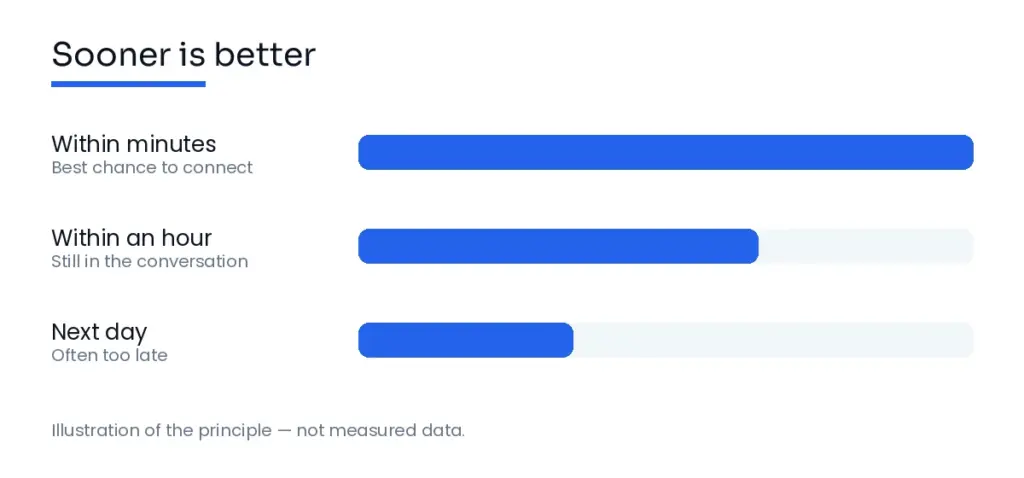
In minutes, not hours. Speed-to-lead decides who gets the job: the first business to reply with a clear next step is usually the one the customer trusts.
A slow reply does not just delay a sale. It gives the lead time to contact someone else, forget the conversation, or decide the job is not urgent. A fast reply keeps the conversation warm while the lead is still thinking about it.
What this looks like in practice
The Lead Routing project cut first response time from 18 minutes to 42 seconds and lifted show rate by 38%. Leads were sent to the right person right away, across 11 sub-accounts, instead of sitting in a shared inbox waiting for someone to notice them.
What to do next
See HighLevel Integration for routing leads inside your CRM, and Agencies for how the same speed matters when you manage leads for clients.
Frequently asked questions
Is a reply in a few minutes really that different from an hour?
Yes. In an hour, the lead has often moved on. In minutes, you are still part of the decision they are making right now.
Does fast mean rushed?
No. Fast means the lead gets a clear reply and a next step quickly. The detailed conversation can still happen at a proper time.
What if my team is busy?
That is exactly when routing matters. The lead goes to the right person automatically, instead of waiting for someone free to check a shared inbox.
Talk through your next step
Book a demo and tell Muhammad Zain how long leads currently wait for a reply. You will get a straight answer about what to fix first.

Muhammad Zain
AI automation systems for founders, agencies, and service businesses.
@zainflowai
Services
AI Automation
SaaS Development
Agentic AI Systems
HighLevel Integration
AI Consulting & Mentorship
Contact
[email protected]
WhatsApp: +92 318 716 1551
LinkedIn
@zainflowai
© 2026 Muhammad Zain · Privacy Policy